FREE EBOOK
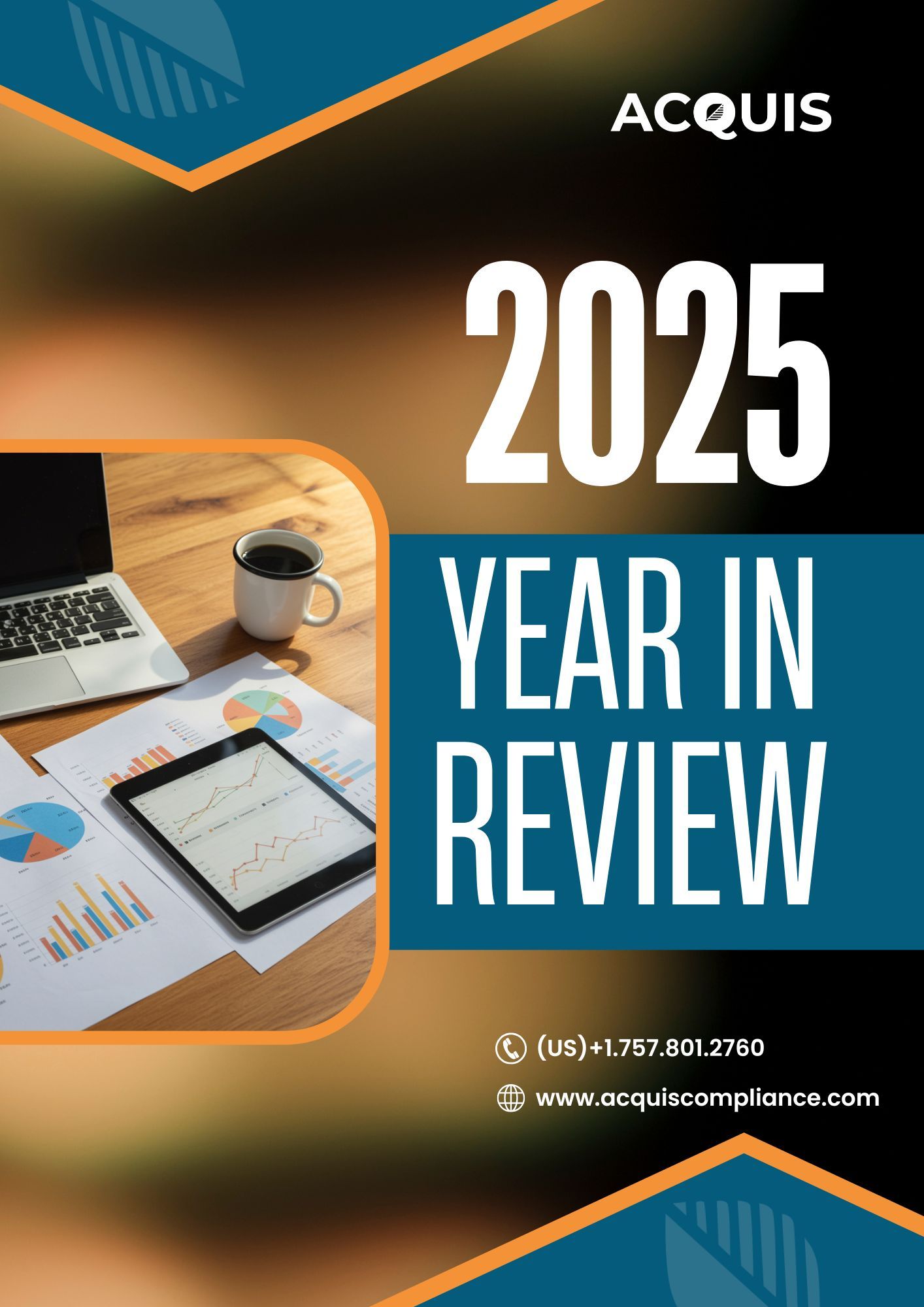
2025 Compliance Year in Review: Key Global Regulatory Changes
Page 1 of 1
Why 2025 Changed Compliance Forever
2025 was not simply another year of regulatory updates. It was the year regulators shifted from publishing rules to testing how companies actually execute compliance.
Across chemicals, product compliance, sustainability reporting, and trade controls, enforcement agencies began focusing less on declarations and more on evidence, traceability, and versioned decision-making.
Reference lists changed multiple times in a year. Exemptions moved from open-ended to time-bound. Reporting templates gained stricter validation logic. System platforms began enforcing regulatory interpretation.
As a result, compliance failures increasingly occurred not because companies ignored regulations, but because they could not prove how decisions were made.
The 2025 Year in Review eBook explains the regulatory shifts that defined the year and provides a practical framework for transforming compliance from reactive tasks into controlled, auditable systems.
What’s Inside the eBook
Chapter 1 – Compliance Became a System, Not a Task
Explains how regulatory enforcement evolved in 2025 and why traditional compliance methods — spreadsheets, annual declarations, and generic supplier statements — are no longer defensible. Introduces the four core questions regulators now implicitly ask: decision, baseline, data, and evidence.
Chapter 2 – Chemicals & Substances Compliance
Examines key developments across chemical regulations including REACH SVHC updates, POPs restrictions, PFAS reporting expansion, and Proposition 65 warning changes. Demonstrates why chemical compliance is now dependent on regulatory list versions, upstream visibility, and documented evidence.
Chapter 3 – Product Compliance & Materials Data
Explores how product compliance failures increasingly resulted from exemption tracking issues, material data inaccuracies, and system validation logic. Covers developments in RoHS exemption timelines, IMDS validation updates, and the growing importance of structured material data.
Chapter 4 – Supply Chain Traceability & Trade Controls
Breaks down the operational impact of major global regulations including EUDR, UFLPA, and CBAM. Shows why market access now depends on provable traceability, risk-based supplier analysis, and defensible due diligence evidence.
Chapter 5 – The 2026 Compliance Readiness Playbook
Provides a practical 90-day stabilization plan for compliance teams. The roadmap covers regulatory baseline control, targeted supplier campaigns, evidence management, and system-driven workflows that allow organizations to stay ahead of regulatory change.
Key Topics Covered
- REACH SVHC Candidate List updates and Article 33 obligations
- POPs Regulation Annex I restrictions
- PFAS reporting requirements under TSCA
- California Proposition 65 warning framework changes
- RoHS exemption expiry management
- IMDS 15.x validation logic and product data accuracy
- EU Deforestation Regulation (EUDR) due diligence
- UFLPA forced labor enforcement expectations
- Carbon Border Adjustment Mechanism (CBAM) reporting
- Supplier evidence management and traceability systems
Why Download This eBook
✔ Understand how regulatory enforcement evolved in 2025 ✔ Identify the most common compliance failure patterns across industries ✔ Learn how to convert regulatory updates into defensible compliance decisions ✔ Build traceable compliance processes for chemicals, materials, and supply chains ✔ Prepare your organization for 2026 enforcement expectations
Who This eBook Is For
- Compliance and regulatory teams
- Product compliance managers
- Sustainability and ESG leaders
- Supply chain and procurement professionals
- Manufacturers selling into global markets
Download the 2025 Compliance Year in Review
Regulations will continue to evolve, but the core lesson from 2025 is clear: compliance is no longer about declarations — it is about evidence.
Download the 2025 Year in Review to understand the regulatory shifts shaping global compliance and learn how to build systems that stand up to audits, inspections, and customer scrutiny.
Disclaimer: The information provided in Acquis Compliance's blogs, ebooks, and other materials is intended for informational purposes only and should not be construed as legal advice. While we strive to provide accurate and up-to-date information, the rapidly evolving nature of compliance regulations means that the content may not always reflect the most current legal standards or interpretations. Therefore, it is crucial to consult with qualified legal professionals or our experts to ensure compliance with specific regulations and requirements applicable to your business. Reliance on the information provided without seeking professional advice could result in legal risks and potential non-compliance. Acquis Compliance disclaims any liability for errors, omissions, or damages arising from the use of the information provided in our materials.